



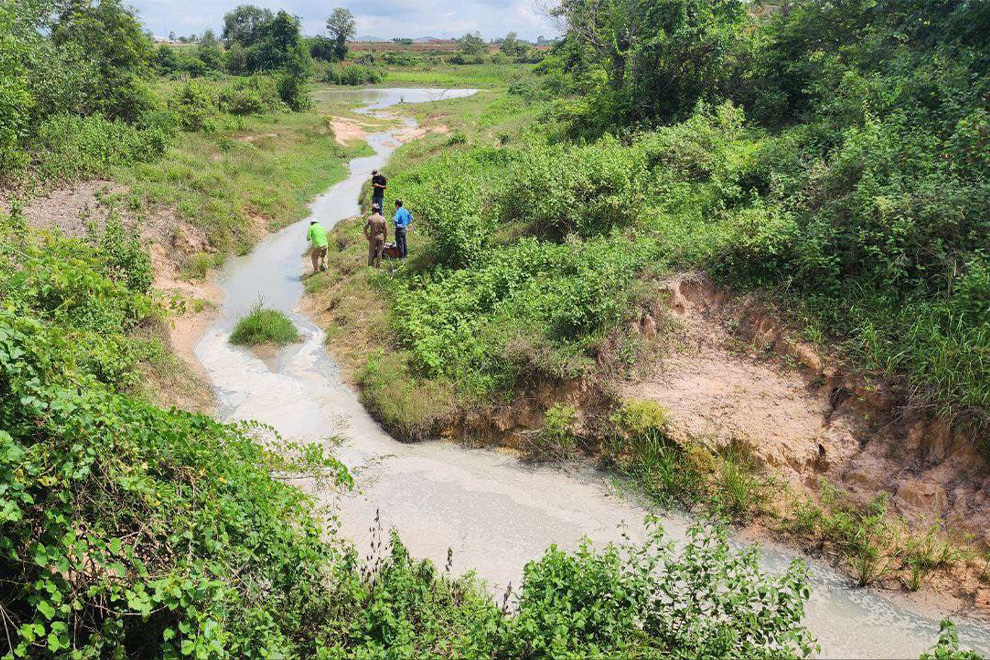
Minister of Environment Eang Sophalleth has issued formal notices to several large companies which have been identified as major polluters. At least six businesses have been ordered to pay fines for discharging untreated wastewater, polluting public water sources, affecting local residents and harming the environment.
Boeung Ket Planting & Industrial Co., Ltd. was hit with the largest penalty, amounting to 120 million riel, or approximately $30,000.
According to an October 2 notice, the company’s mango processing factory — located in village 1, Treng Trayoeng commune, Phnom Sruoch district, Kampong Speu province — polluted the O’Pam Tung stream.
The company is required to pay compensation for any public health impacts and environmental damage. This will be calculated by ministry specialists, and will also be due on October 31.
The company is obligated to clean up the five kilometres of waterway that it polluted and has until March 31 next year to install a liquid waste treatment facility that meets all technical standards and regulations, along with monitoring equipment.
An environmental impact assessment report must be submitted to the environment ministry for review and evaluation no later than December 31 this year.
“If the company fails to implement the above measures, the ministry will apply legal sanctions and suspend operations,” warned Sophalleth.
Some of the other operations that have been fined include Four Seasons Food Taste Co, in Phnom Sruoch district, Kampong Speu, 40 million riel, GG Fashion (Cambodia) Co., in Kamboul district, Phnom Penh, over 19 million riel, Musk (Cambodia) Import Export Co., in Phnom Sruoch District, Kampong Speu for 50 million riel.
Ji Li Long (Cambodia) Fruit Industry Co., in Ang Snuol district, Kandal, was hit with a 60 million riel fine, while a crude oil processing workshop in Kampong Chhnang was fined 40 million riel.
During an August 27 review meeting of the environment ministry’s first-half performance and second-half direction, Sophalleth explained that the fines are not about generating revenue but are intended to compel companies to change their practices and halt pollution that threatens public health.
In the first eight months of 2025, the ministry reported that it prevented nearly 12 million cubic metres of untreated water from various factories and companies from being discharged into public water sources — helping to avert environmental and health impacts on citizens.
In the first half of 2025 alone, 52 companies and factories were subjected to legal action by the ministry, including fines, mandatory corrective orders, and in some cases full suspension of operations, after they were found to be breaching environmental regulations.
