



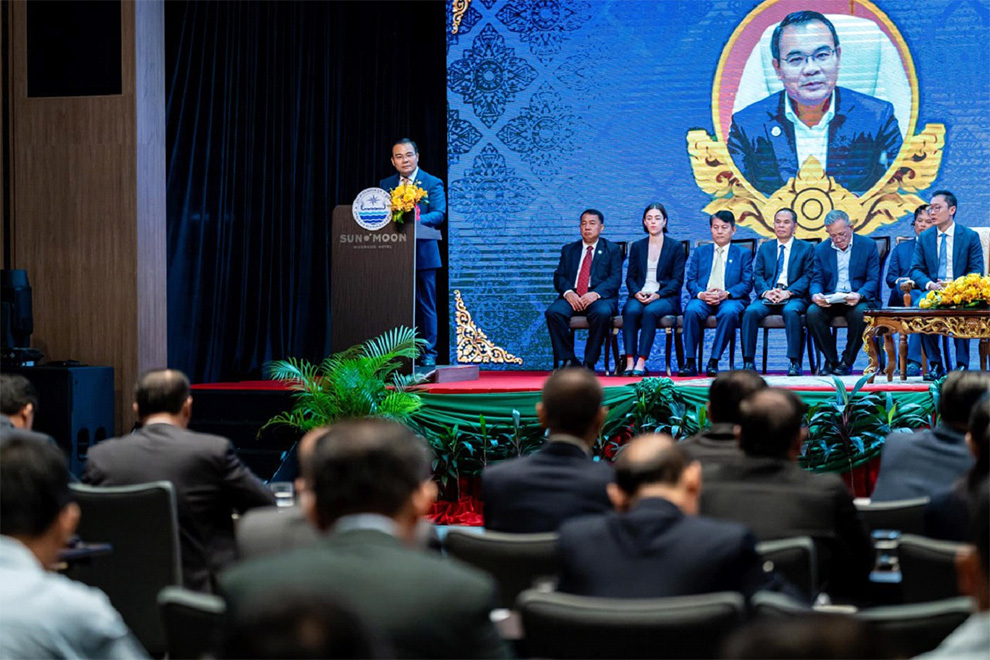
The Ministry of Water Resources and Meteorology, in collaboration with the Australian government, convened a national consultation workshop to advance the design of the Cambodia Climate Resilience Water Governance Programme (CCRWGP), which aims to build a more coordinated, inclusive and climate-responsive approach for managing the Kingdom’s water resources.
The July 17 workshop, held in Phnom Penh, brought together over 170 participants, including representatives from government ministries, development partners, civil society organisations, research institutions and the private sector. It marked a key milestone in shaping a high-level roadmap for water governance that reflects national development priorities while addressing the growing impacts of climate change.
“Cambodia’s development ambitions depend on our ability to manage water resources sustainably and equitably. The CCRWGP will provide a modernised and comprehensive framework to guide water governance, integrate inclusive planning and respond to climate risks that threaten lives, livelihoods and national progress,” said water resources minister Thor Chetha, emphasising the need for urgent action.
With rising water demand, shifting rainfall patterns and more frequent floods and droughts, the programme addresses urgent governance gaps while aligning with both ongoing and future initiatives, said a joint press release.
Australian ambassador Derek Yip explained that the CCRWGP aligns with Australia’s development priorities in Cambodia, supporting institutional reform, local leadership and climate resilience through inclusive partnerships.
“Australia is proud to partner with Cambodia on a programme that places climate resilience, inclusive governance and local leadership at its core. This initiative reflects our shared priorities and strengthens Cambodia’s capacity to lead on water governance through practical and climate-resilient approaches,” he said.
According to the release, the roadmap for climate-resilient water governance includes four strategic pillars: modernising national water legislation; building capacity and promoting inclusive participation; improving data, systems, and risk management; and implementing pilots and embedded learning.
It was designed as a flexible, high-level framework to guide coordinated action across government, development partners, and communities.
The water resources ministry will now integrate the feedback gathered into the final programme design, with Phase I implementation expected to begin later this year.
“As the climate crisis deepens, Cambodia’s efforts to lead with evidence-based, inclusive, and forward-looking water governance offer a critical path to sustainable development,” the release shared.
It added that CCRWGP builds on the seventh-mandate government’s Pentagonal Strategy and supports the goal of achieving upper-middle-income status by 2030 and becoming a high-income country by 2050.
