



The Ministry of Women’s Affairs has asked the Fred Hollows Foundation Cambodia to expand its eye health care programmes into remote areas, with a particular focus on women and children, in order to help reduce the blindness rate to 0.35 per cent by 2030.
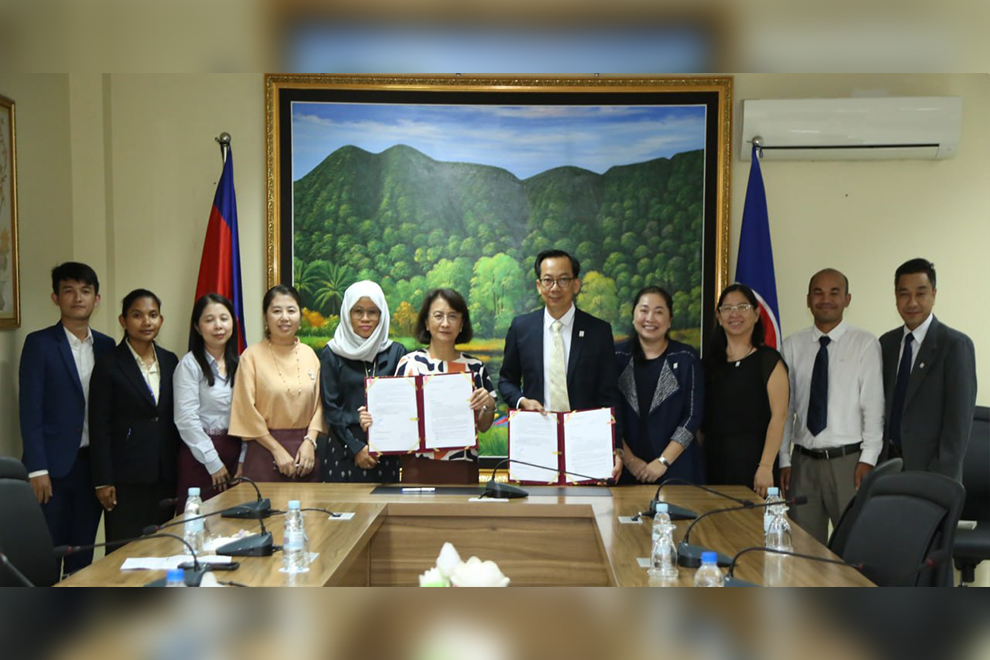
Women’s affairs minister Ing Kantha Phavi made the request during an August 25 signing ceremony with the foundation, for the continuation of the “Sustainable Equitable Eye-health through Integrated People-Centered Eye Care’ (SEE-IPEC)” project.
On Tuesday, August 26, a ministry statement explained that the agreement will see an expansion of services, and follows the success of past implementation in six target provinces: Preah Sihanouk, Kampong Speu, Kampong Chhnang, Kampong Thom, Tbong Khmum and Kandal.
Activities conducted under the project include training local communities on eye care methods, providing eye check-ups, eye drops and glasses, and encouraging people to access free, high-quality and equitable cataract surgery services in safe environments.
Building on these achievements, the Fred Hollows Foundation Cambodia and the ministry of Women’s Affairs will continue cooperation through a new project, “Eye Health for Universal and Inclusive Coverage in Cambodia”, which will expand to additional provinces to ensure services reach target groups nationwide.
The minister praised the achievements accomplished through past cooperation, noting that it has made an important contribution to improving public health and promoting gender equality by addressing eye health concerns in targeted communities.
“The minister has requested that the Fred Hollows Foundation expand project implementation into more areas, particularly in remote regions, so that women, girls and vulnerable groups can begin to access eye health services, follow proper medical prevention methods and receive timely treatment,” added the statement.
In addition, she requested that the project continue further activities such as public education campaigns through social media and direct community outreach, in order to help reduce the blindness rate to 0.35 per cent by 2030.
